
 By
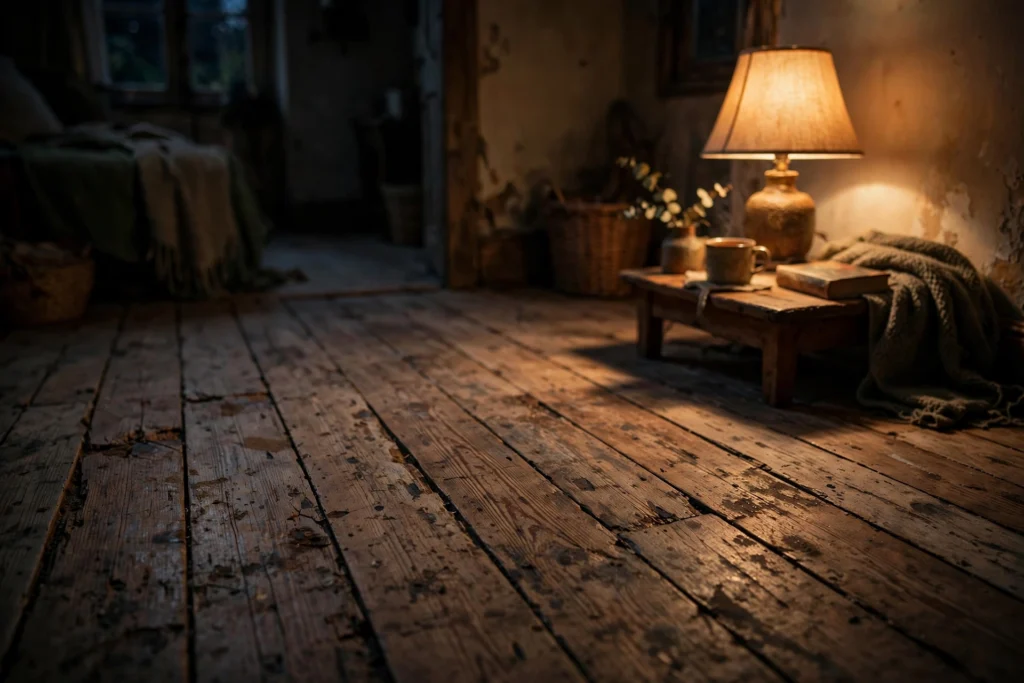
Stay in an old house on a quiet night and the building starts talking. A floorboard answers your step with a long groan. A stair complains halfway up. Somewhere in the roof, a beam settles with a soft knock. Dutch has a single everyday word for this whole family of noises, and once you hear it you start noticing the sounds everywhere: kraakt.
English speakers need context before they can translate it. Sometimes the honest translation is “creaks”, sometimes “cracks”, and sometimes it describes an action rather than a noise at all. That range is exactly what makes the word worth an article. Below is a tour of the sounds it names, the things that produce them, and the surprising places the word turns up in Dutch life.
What Kraakt Covers: Sound, Splitting and Solving
The word is a living form of the Dutch verb kraken, the form used with you, he, she or it as the subject. At its heart sits one physical idea: something stiff is being stressed, and it responds. A board bends and complains. A shell gives way and splits. A safe resists, then yields to the person working on it.
That single idea explains the word’s range. When the response is slow and noisy, English reaches for “creaks”. When it is sudden and final, English prefers “cracks”. Dutch keeps one word for the whole event, which is why learners meet kraakt in sentences about floors, ice, nuts, joints, codes and even empty houses, and why a dictionary’s first translation is only a starting point. Odd terms often behave this way, gathering meanings as they travel; readers who enjoyed our look at xnañga will recognise the pattern.
Why Floors and Stairs Complain at Night
The classic setting for kraakt is a wooden floor after dark, and the physics is friendly rather than spooky. Wood shrinks and swells with the seasons. Boards dry out in winter heating, gaps open around old nails, and two pieces of timber begin to rub or shift a fraction of a millimetre when weight lands on them. That tiny movement, amplified by the hollow space under the floor, is the groan you hear.
Night makes it louder for two reasons. The house cools, timber contracts, and stressed joints release their tension in small clicks and creaks. Just as importantly, the building is silent, so a sound that would vanish under daytime noise suddenly seems to fill the room. Stairs suffer most because each tread flexes on its supports every time it is used, year after year, slowly loosening the fixings that once held it tight.
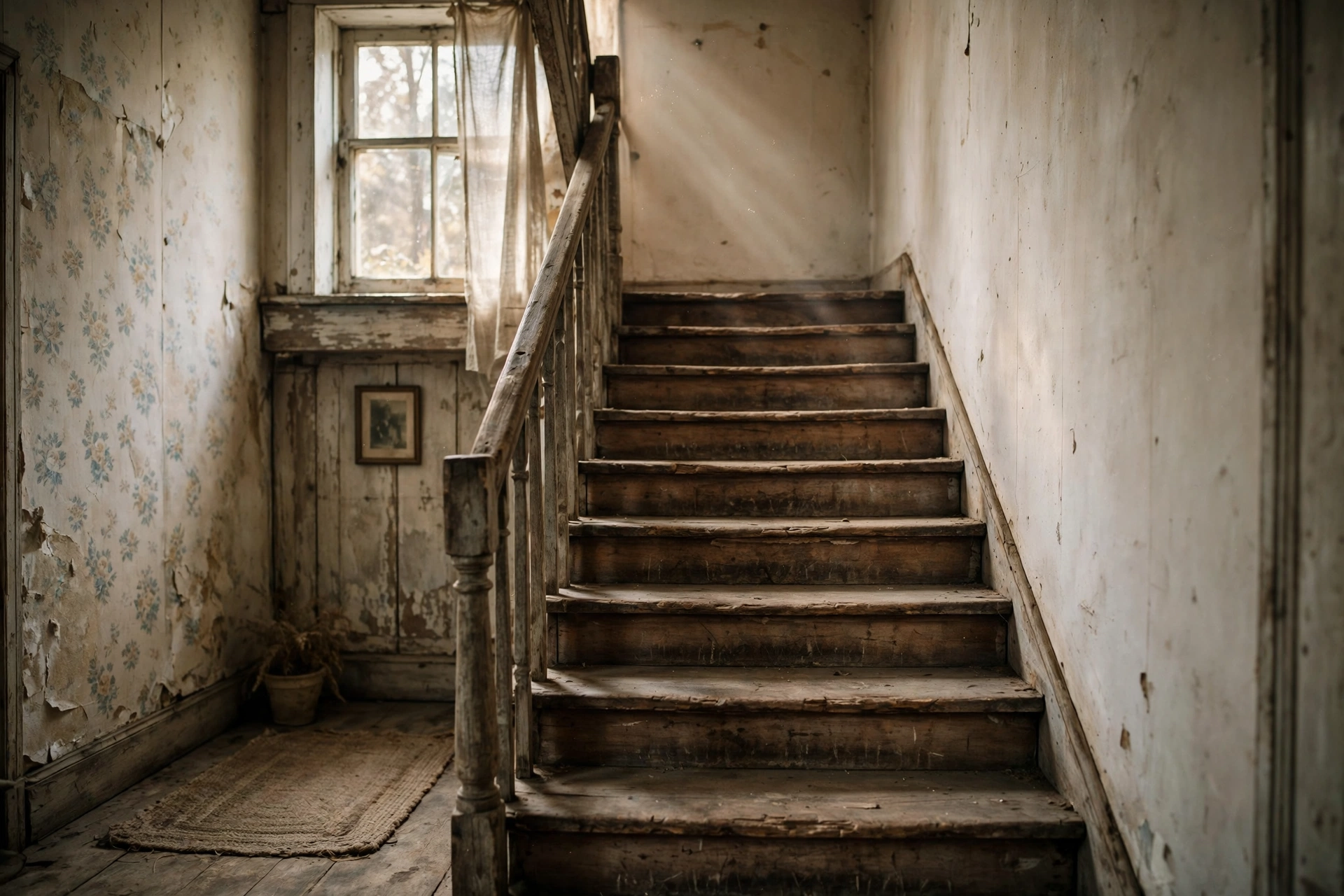
The same timber behaviour appears all over a house, from floor joists to the wooden roof trusses above your head. A creak is rarely a warning sign on its own. It becomes one only when it arrives with new cracks in plaster, doors that suddenly stick, or a floor that feels spongy rather than merely talkative.
Ice, Shells and Other Sharp Cracks
Slow stress makes a creak; fast stress makes a crack, and kraakt covers both. A frozen lake on a cold morning is the grandest example. Ice expands and contracts as temperatures swing, pressure builds along invisible fault lines, and the sheet relieves it with a bang that can echo across the whole surface. Walkers sometimes hear deep booming notes from under their boots, the sound of a crack running far away through the ice.
Smaller versions happen in the kitchen. A walnut in a nutcracker resists, then splits with a clean snap. An egg tapped on a bowl, a chocolate bar broken along its groove, the crust of fresh bread torn by hand: each is a small, controlled fracture, and each would be described with the same Dutch verb. Even the ground joins in during a dry summer, when clay soil shrinks and splits into a network of cracks you can fit a finger into.
What unites these moments is the release. Energy stored slowly, in ice, shell or soil, escapes in a fraction of a second, and the sharp sound is simply that escape made audible. Where a floor complains gradually, these materials fail all at once, which is why English separates the two noises while Dutch happily keeps them together.

When Your Own Joints Join In
Bodies make the sound too. Most people know the pop of knuckles being pulled, the click of a knee on the stairs, or the small crack a neck makes after a long day at a desk. For years these noises carried a frightening reputation, but research into cracking joints paints a calmer picture: the pop comes from gas bubbles forming and collapsing in the fluid that lubricates the joint, and ordinary knuckle cracking has not been shown to cause arthritis.
That does not make every body noise harmless. A crack that arrives with pain, swelling or a joint that locks deserves a doctor, not an article. But the everyday clicks and pops of a healthy body are simply the same physics as the floorboards, pressure and release inside a structure, played on a smaller and softer instrument. Dutch speakers smile at this, because the same kraakt that describes their staircase also describes their knees.
Codes, Safes and Empty Houses
Dutch also uses the verb where no physical object breaks at all. A detective who finally solves a cipher has cracked it, and Dutch says the code is gekraakt. A safe forced by a burglar, a password defeated by a computer, a tough problem that yields after weeks of work: all of them borrow the image of something hard finally splitting open.
Strangest of all for visitors, kraken is also the Dutch word for squatting, occupying an empty building without the owner’s permission. The practice has a long, debated history in Dutch cities, especially Amsterdam, where housing shortages pushed people into vacant properties. The name is thought to come from the sound and force of breaking into a locked, empty house, the lock quite literally being cracked so a new life could begin inside.
These figurative uses are not random. Each one keeps the core image alive: resistance, pressure, and then a sudden giving way. Learn the physical word and the metaphors translate themselves.
How to Say It
Say it as one firm beat: krahkt. Start with a hard k, open into a long “ah” (the double a in Dutch spelling marks that length), and finish by actually pronouncing the kt ending rather than swallowing it. English speakers tend to soften the end of words; Dutch does the opposite here, and that crisp final t is part of the word’s identity.
If you want the technical label, kraken is listed in dictionaries as a verb of the ordinary, well-behaved kind, and this form is simply its present tense for most subjects. You do not need the grammar table to use it, though. One honest sentence is enough: point at the stairs, smile, and say the house kraakt, and every Dutch listener will hear the floorboards with you.
Listening Differently From Now On
Words like kraakt reward attention. After a week of noticing, you start hearing the category everywhere: the protest of a chair as someone sits, the tick of a cooling engine, the snap of a dry twig under a boot on a forest path. Each is a small structure negotiating with pressure, and Dutch hands you one tidy word for the whole negotiation.
So the next time a floor answers your footstep in the dark, you will know what to call it, how to say it, and why ice, knuckles, codes and old houses all share the same sound in Dutch. The house was never haunted. It was only talking, and now you speak a little of its language.
Pingback: Dulcoglide: A Calmer Way to Use Suppositories - leahartman.com