By
Hypackle is the word thousands of people type into a search bar when they want to play games in their browser — free, instant, no download, no account. What most of them are actually looking for is Hypackel, a browser-gaming project whose name is spelled with an E before the L. The two spellings have become tangled together in search results, and around them has grown a small crowd of copycat sites, explainer articles and outright invented meanings. This article sorts out what is documented, what is claimed, and what you should check before you click play.
The honest starting point is that there is no single official product behind the name. There is a real gaming project, a family of lookalike websites trading on it, and a trail of articles that stretch the word into shapes it never had. Knowing which of those you are looking at is most of the battle.
Hypackle or Hypackel: Which Spelling Is Right?
The documented project spells itself Hypackel. Its history is visible in public: a browser-gaming website offering a large library of games that run in the page, and a lighter companion project, Hypackel Lite, hosted through GitHub Pages, with repositories that anyone can inspect. Older lists of its library include familiar browser staples such as 2048, Slope, Moto X3M, Retro Bowl and Cookie Clicker; a research check in November 2026 found titles like PolyTrack, N-GON and Gladihoppers highlighted on the games homepage.
Most guides that have dug into the question agree on the simple answer: Hypackle is the spelling people use when they have heard the name spoken and never seen it written down. Search engines connect the two, so results for one spelling fill up with pages about the other. A third variant, Hypackell with a double L, is used by at least one separate site that describes itself as a mobile game directory — a different thing again, despite the near-identical name.
What the Games Sites Actually Offer
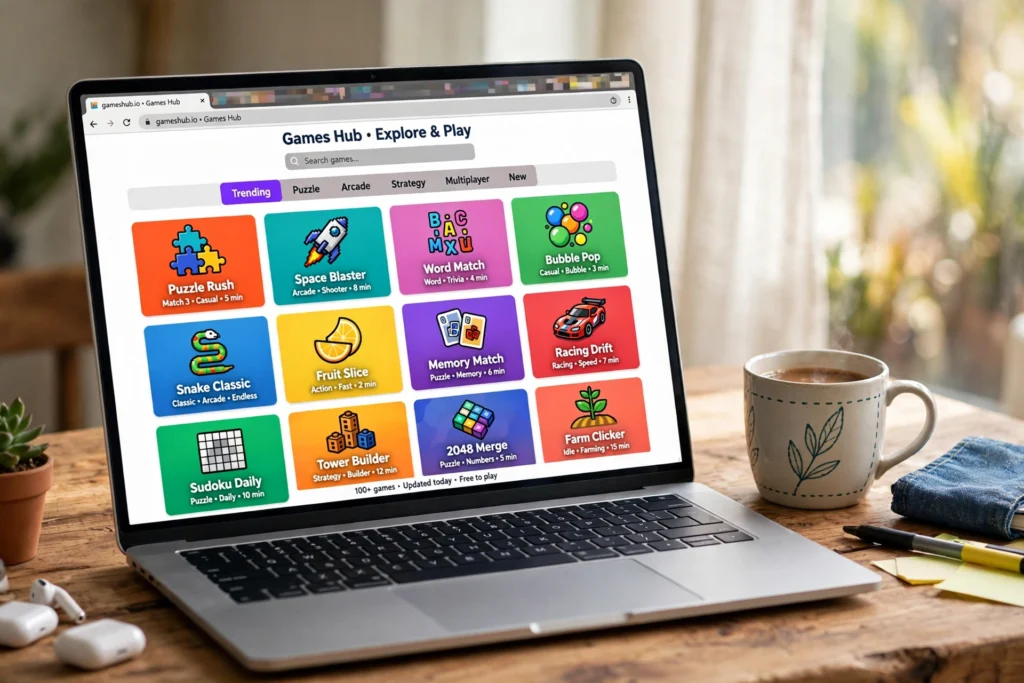
A typical Hypackle-style site is a menu, not a store. You open the page, scroll a grid of game tiles grouped loosely into action, puzzle, racing, arcade, sports and retro corners, click one, and play in the tab you already have open. The libraries advertise 400 or more titles, and the pitch is always the same: nothing to install, nothing to pay, no sign-up wall between you and the first level.
That pitch explains the audience. A large share of the traffic comes from students and office workers looking for what players call unblocked games — sites that still load on school or workplace networks where gaming is normally filtered out. The lightweight Lite version exists for exactly this world: small pages, low hosting needs, quick loading on modest hardware like school Chromebooks.
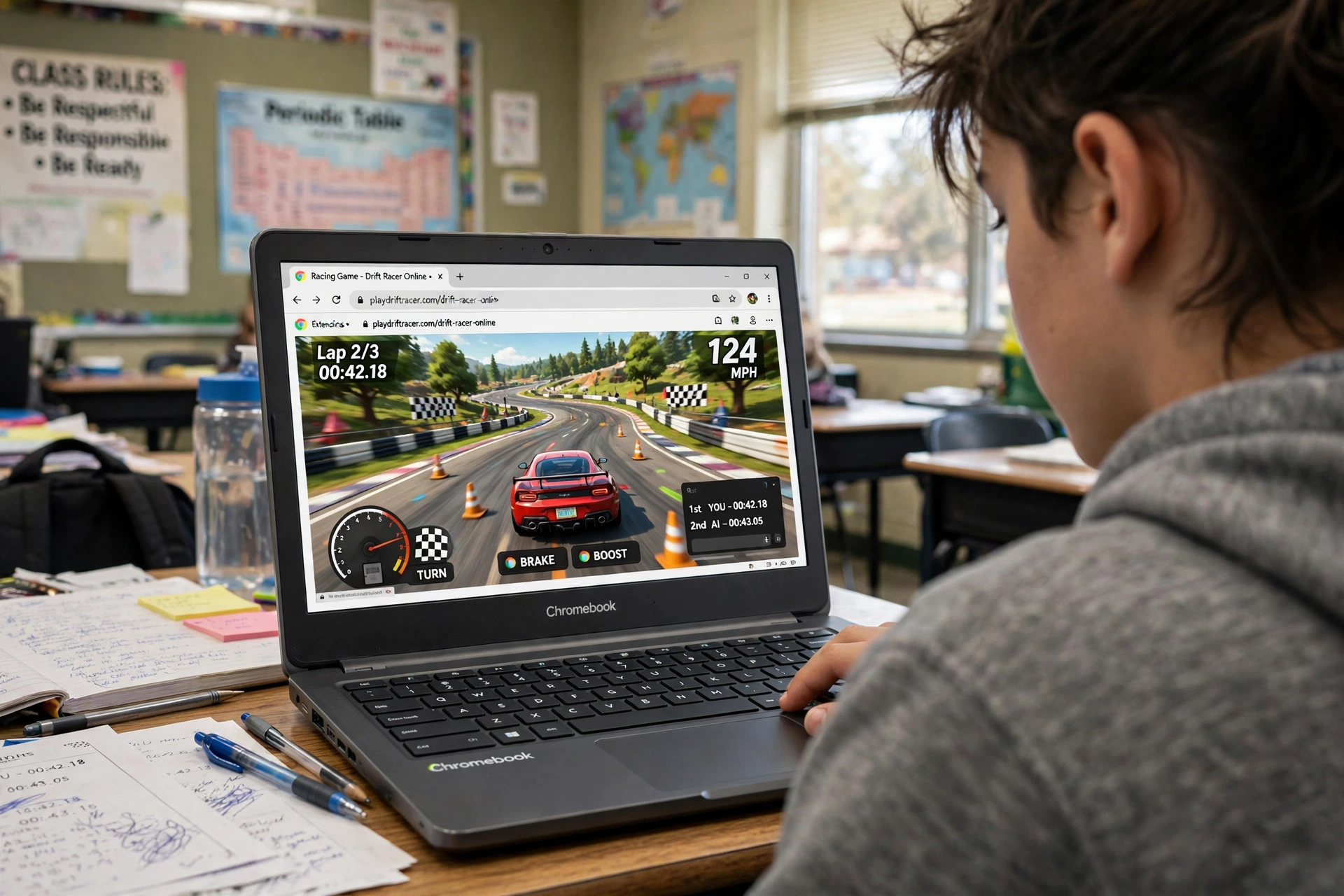
The catalogue leans on proven favourites rather than exclusives. Endless runners, two-minute puzzle games, physics racers and retro arcade ports do the heavy lifting, because they load fast and explain themselves in seconds. A Hypackle library lives or dies on that first click: if a game takes a minute to load or needs a tutorial before it starts, the break-time player is simply gone. That is why the same famous titles reappear on every site in this family — they are the ones a new visitor already knows how to play.
How Browser Games Run Without Downloads
The trick is that the browser does all the work. When you open a game page, your browser downloads the game’s files the same way it downloads any web page, then runs them locally using standard web technology — HTML5, JavaScript, WebGL for 3D graphics, and emulation for older retro titles. That is the whole mechanism behind Hypackle and every site like it: no installer because there is nothing to install, and no account because the game lives entirely in your tab.
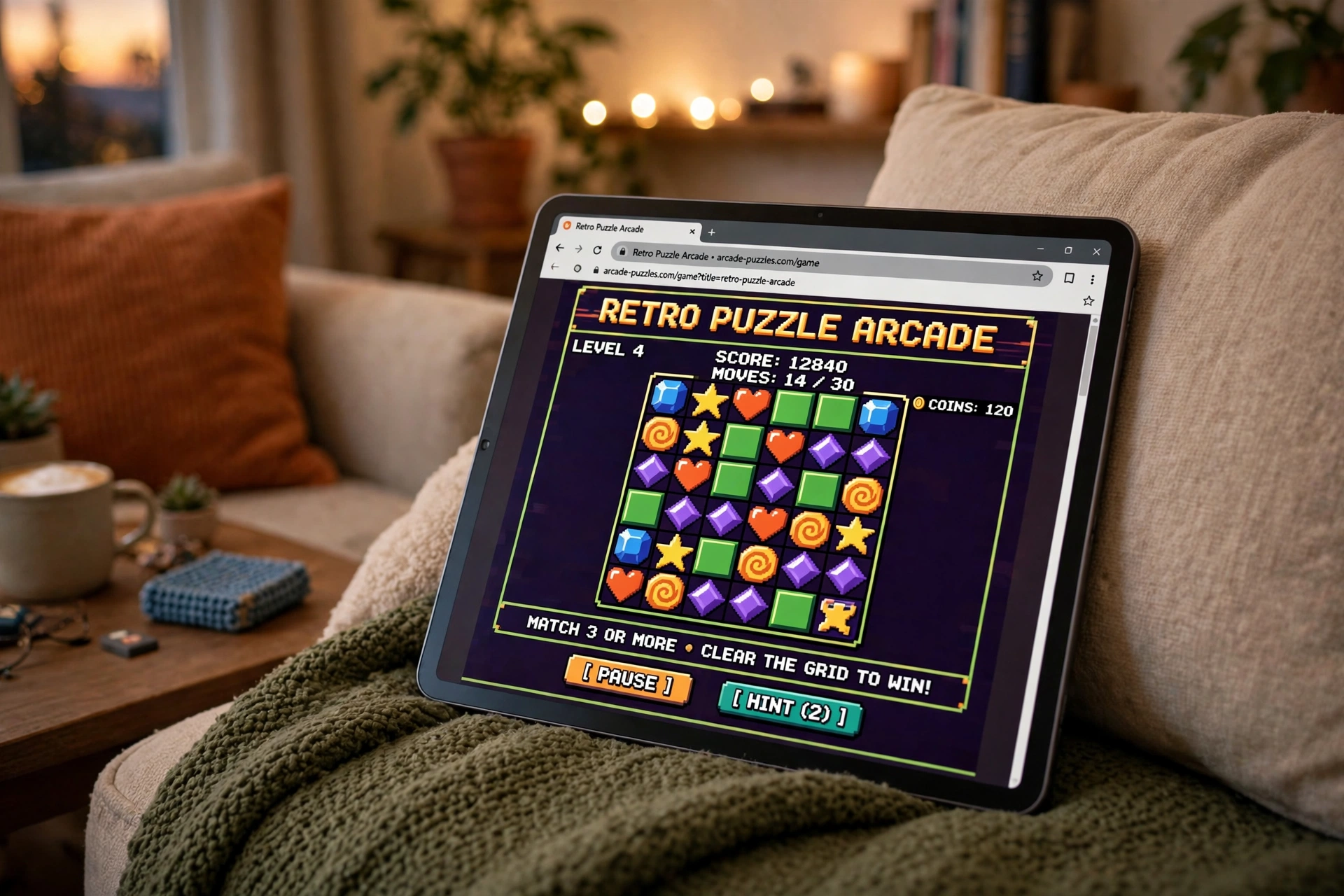
The same mechanism sets the limits. Performance depends on your device and browser, saves may live only in the browser’s local storage and vanish when it is cleared, and a game framed in from another server can break or disappear without warning. A browser games hub is best understood as a directory with a play button — convenient, disposable, and only as stable as the pages it gathers.
It also explains why these hubs age the way they do. A traditional game store actively maintains its catalogue; a browser hub mostly inherits whatever its linked pages still serve. Links rot, framed games move house, and a tile that worked in September can be a blank grey box by December. The Lite approach — small, self-contained, hosted on simple static infrastructure — is partly an answer to that fragility: fewer moving parts, fewer things to break, and a page that one maintainer can realistically keep alive.
Safety: The Checks That Matter
The name Hypackle carries no guarantee, because no single owner stands behind every site that uses it or its twin spelling. The original project has a public development history you can verify; the lookalikes mostly do not. So the checks are the ones that apply to any free-games site. Be suspicious of any page that asks you to download a file, install an extension or create an account to play — the genuine article needs none of those. Watch for pop-ups and redirect ads, keep your browser updated, and check the exact domain in the address bar rather than trusting a familiar-looking logo, a point careful guides like Trend Wired Magazine and 7bio also make.
None of this requires paranoia. It requires the same thirty seconds of attention you would give any unfamiliar website: right domain, no downloads, no login, and an exit the moment a page starts asking for more than your time.
The Other Meanings You Will Meet
Search long enough and hypackle also appears dressed as other things: a team productivity platform, a business workflow tool, a personal-growth method built on neuroplasticity, even a species of jumping spider. These claims circulate in explainer articles, but unlike the gaming project they have no verifiable product, company or public record behind them that a reader can independently check. They are best treated as content built around a trending search word — a reminder that a confident article is not the same thing as a real thing. Like Iprowess, it is a name whose search results promise more certainty than the facts support.
The Short Version
Hypackle is best understood as the popular misspelling of Hypackel, a documented browser-gaming project offering hundreds of free games that run instantly in a web page, with a lighter GitHub-hosted version alongside it. Around that real core sit copycat sites and invented meanings, so the name alone never tells you what a page is. Check the domain, refuse downloads and logins, and the games themselves are harmless fun. More explainers of names like this live in our Technology section.